
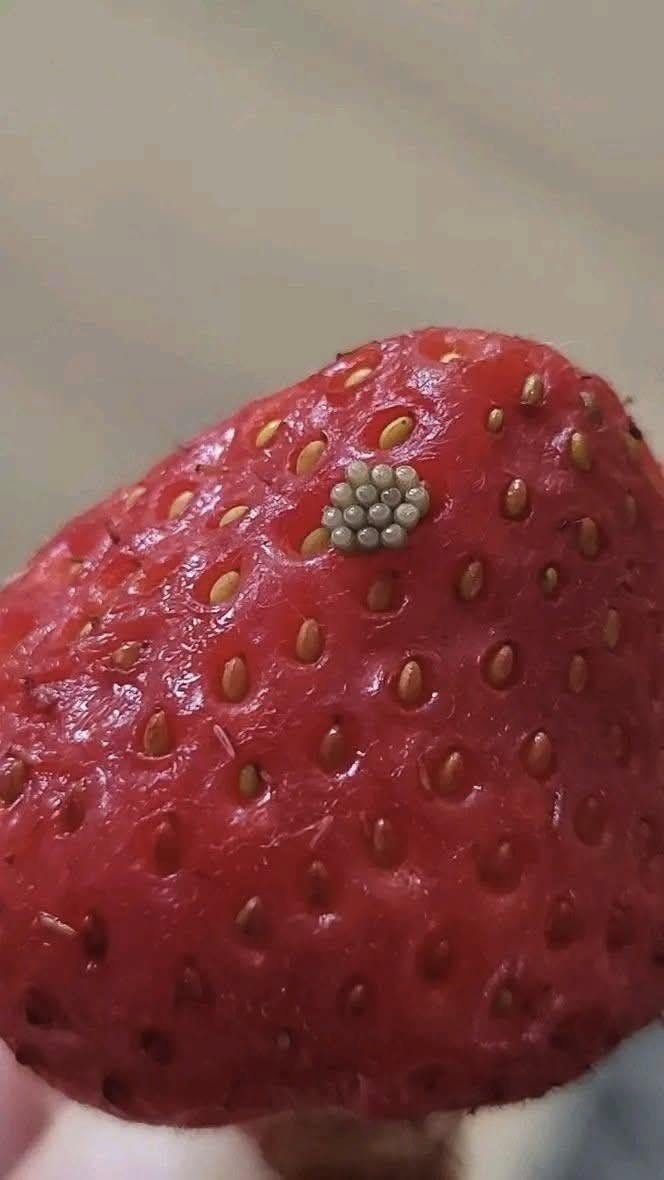
Are They Safe to Eat?
Yes—accidentally eating these larvae is not harmful to humans.
- They are non-toxic
- They do not carry diseases dangerous to humans
- They are digested like any other protein
Food safety authorities, including the USDA, confirm that ingesting small amounts of fruit fly larvae poses no health risk.
That said, most people prefer to remove them for hygiene and peace of mind.
How to Clean Strawberries Properly
Before Buying:
- Choose firm, bright red berries
- Avoid soft, leaking, or moldy containers
- Check for damaged fruit at the bottom of packaging
At Home:
- Store unwashed strawberries in the fridge
- Keep them in a breathable container
- Wash only before eating to reduce spoilage
Alternative Cleaning Method (Vinegar Wash)
If you prefer a gentler method:
- Mix 3 parts water + 1 part white vinegar
- Soak for 5–10 minutes
This helps remove bacteria and mold but is less effective at forcing out larvae compared to salt water.
Why This Happens More with Organic Berries
Organic strawberries are often more likely to contain small insects because they are grown with fewer synthetic pesticides.
This does not mean they are unsafe—it simply reflects a more natural growing process.
Many people see this as a trade-off between:
- Fewer chemicals
- Slightly higher chance of natural pests
Final Thoughts
Finding tiny larvae in strawberries can be unsettling, but it’s a normal part of nature and food production. These organisms are harmless and easily removed with a simple salt water soak.
In most cases, your strawberries are perfectly safe to eat after proper rinsing.
Nature isn’t sterile—and that’s completely normal.