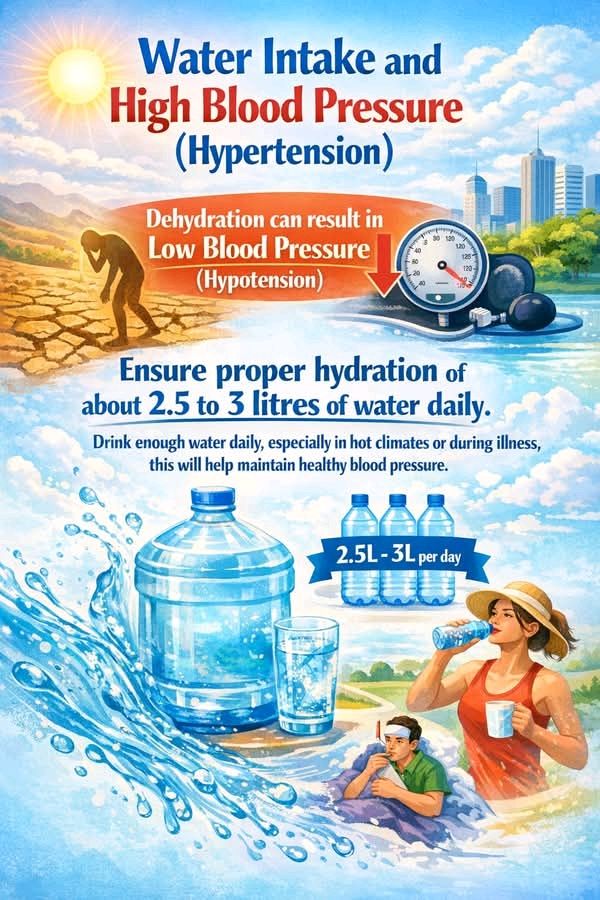
Learn how proper water intake affects blood pressure, supports circulation, and prevents dehydration-related health issues. Discover practical tips to stay hydrated and maintain cardiovascular health.
📖 Full Article
🌟 Introduction: Why Water Matters for Your Heart
Water is essential for life. It makes up approximately 50–70% of the human body and constitutes a major component of blood — about 90%. Blood is the delivery system for oxygen, nutrients, and hormones, and proper blood volume is critical for maintaining healthy blood pressure.
Without adequate water, your body struggles to circulate blood efficiently, which can affect both heart function and overall health.
🌊 How Dehydration Impacts Blood Pressure
When the body doesn’t get enough water:
-
Total body water decreases – every system in your body relies on fluid.
-
Blood volume reduces – lower blood volume means less fluid for the heart to pump.
-
Circulation becomes less efficient – the heart works harder, but with less fluid, pressure drops.
This can lead to:
❌ Reduced blood circulation
❌ Dizziness or lightheadedness
❌ Weakness or fatigue
❌ Low blood pressure (hypotension)
❌ In severe cases, fainting or shock
💡 Tip: Dehydration is not just a minor inconvenience — it directly affects cardiovascular efficiency and can make managing blood pressure more difficult.
💧 Hydration and Blood Pressure
Adequate hydration helps maintain normal blood volume, which is crucial for stabilizing blood pressure. Proper water intake:
✅ Supports efficient blood circulation
✅ Maintains healthy heart function
✅ Helps prevent hypotension related to dehydration
✅ Supports physical activity by keeping blood flowing and muscles fueled
🌿 How Much Water Should You Drink?