Discovering tiny, jumping specks in your bathtub or sink can be both puzzling and concerning. These minuscule creatures, at first glance, may appear to be mere dust particles, but their sudden, erratic movements suggest otherwise. For homeowners, the sight of these creatures may raise questions about the cleanliness of the household or even the integrity of the plumbing system.
Before jumping to conclusions, it’s essential to identify what these specks are and understand their behavior. More often than not, they are harmless insects known as springtails, rather than indicators of a significant plumbing issue. This article will delve into what springtails are, how to distinguish them from other pests, why they may appear in your home, and what steps you can take to address their presence.
1. What Those Microscopic Grey Jumping Specks Most Likely Are
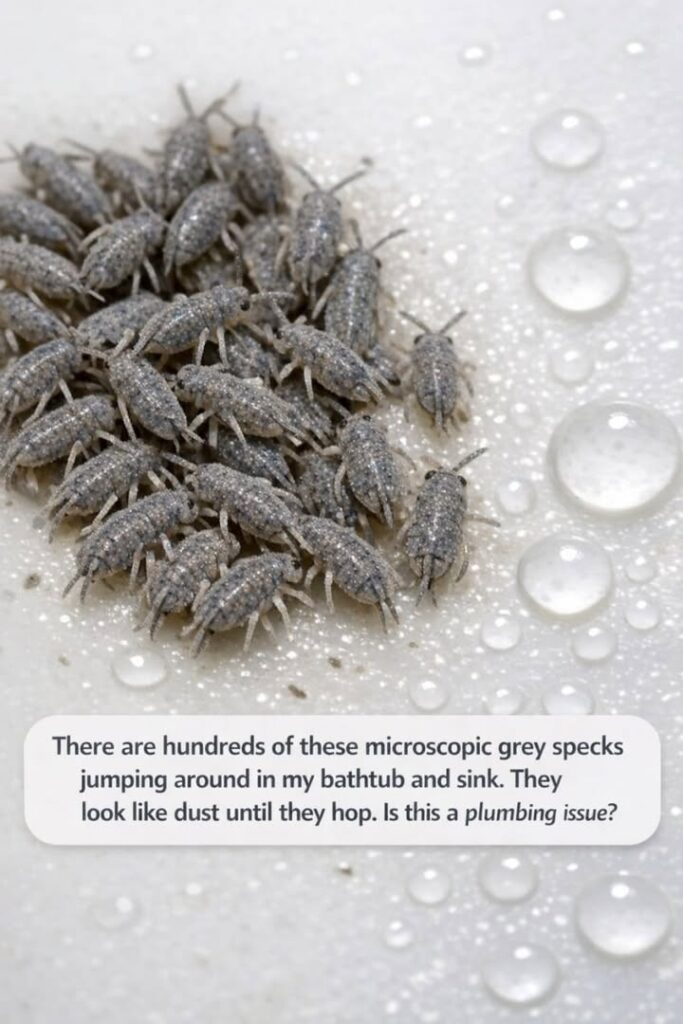
The specks you are observing are most likely springtails, a group of small, wingless insects belonging to the subclass Collembola. These creatures are typically between 1 to 2 millimeters in length, making them difficult to spot with the naked eye unless they are in large numbers. Springtails are known for their ability to jump several centimeters into the air when disturbed, thanks to a specialized structure called the furcula, which acts like a spring.
Springtails are generally gray, white, or brown, and they thrive in damp environments. They feed on mold, fungi, and decaying organic matter, which makes bathrooms and kitchens ideal habitats due to the moisture and organic debris often found in these areas.
2. How To Tell Springtails From Fleas, Bedbugs, Or Dust Mites
While springtails can be confused with fleas due to their jumping ability, there are key differences. Fleas are parasitic and tend to be darker in color, usually reddish-brown, and are more oval-shaped than springtails. Bedbugs, on the other hand, are significantly larger, about 5 millimeters in length, and do not jump.
Dust mites are microscopic and do not jump, making them invisible to the naked eye. They typically thrive in dusty environments rather than damp ones. Observing the behavior and habitat of the creature can help determine whether you’re dealing with springtails or another pest.
3. Why They’re Suddenly Everywhere In Your Sink And Bathtub
Springtails are attracted to moisture, and their presence in your sink and bathtub could be due to an increase in humidity levels. This could arise from a variety of sources, including leaky pipes, poor ventilation, or even recent heavy rainfall. Bathrooms and kitchens provide the perfect combination of moisture and food sources, such as mold and mildew, which can lead to a sudden influx of springtails.
Additionally, seasonal changes can also affect their population. Spring and summer, for instance, are times when humidity is naturally higher, which could explain a sudden appearance.
4. The Hidden Moisture Sources In Bathrooms And Kitchens
Bathrooms and kitchens contain several potential sources of moisture that can be overlooked. Leaky faucets and pipes, improperly sealed bathtubs or showers, and condensation from hot water usage can all contribute to an environment conducive to springtails. Over time, even small leaks can create significant moisture buildup.
Other hidden sources include damp sponges, wet bathmats, and even the condensation that builds up on windows and walls. Ensuring that these areas are dry and well-ventilated can help reduce the likelihood of a springtail infestation.
5. When A Swarm Of Springtails Signals A Plumbing Problem
While springtails themselves are not harmful, a large swarm can indicate underlying moisture problems that may need addressing. If you notice a persistent springtail problem, it could be a sign of a hidden leak or a ventilation issue that is causing excessive moisture buildup.
Regularly inspecting plumbing fixtures, checking for water stains or mold growth, and ensuring that your bathroom and kitchen are properly ventilated can help identify and address any underlying issues.
6. Simple Tests You Can Do Today To Check For Leaks Or Dampness