
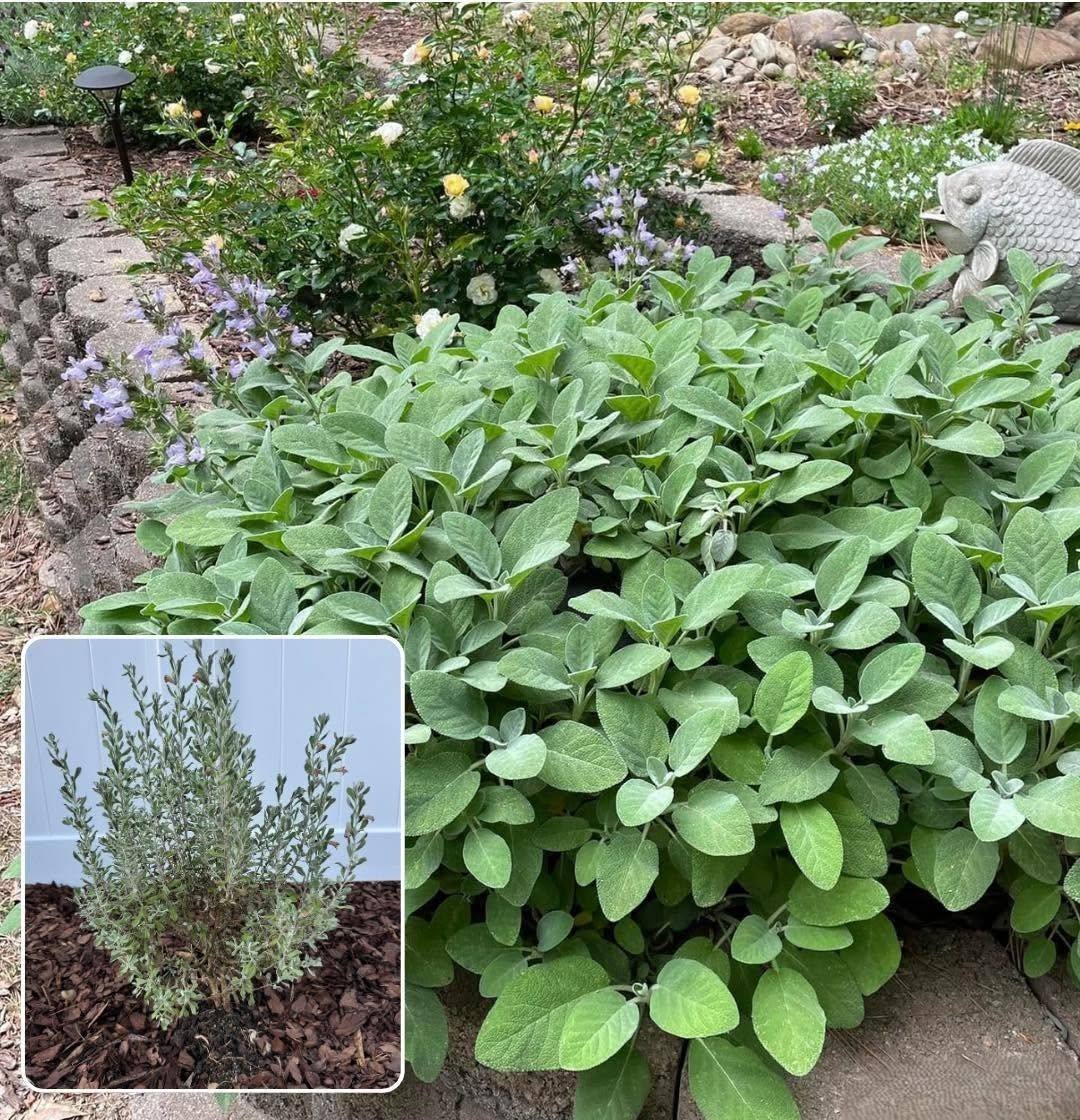
In modern landscaping, we often focus on ornamental beauty—flowering shrubs, shade trees, and decorative plants. But one of the most underrated and valuable additions to any garden is a simple, sun-loving herb: sage (Salvia officinalis).
Far more than just a culinary ingredient, sage is a multifunctional plant that supports pollinators, improves garden biodiversity, adds year-round structure, and enhances outdoor sensory experience.
Here’s why every backyard can benefit from a thriving sage bush.
1. A Powerful Pollinator Magnet for a Healthier Garden
A blooming sage plant is a hub of activity for bees, butterflies, and other beneficial insects. Unlike purely decorative plants, sage produces nectar-rich flowers that actively support pollinator populations.
How sage attracts pollinators
Sage flowers are designed with a unique structure that gently deposits pollen onto visiting insects as they collect nectar. This increases cross-pollination efficiency and supports a balanced garden ecosystem.
Planting sage contributes to:
- Stronger pollinator activity
- Improved biodiversity
- Healthier nearby plants and crops
2. A Fragrant, Sensory Garden Experience
Sage is known for its aromatic, slightly earthy fragrance, which is released when its leaves are touched or brushed against.
The plant has been valued for centuries, with its name derived from the Latin salvere, meaning “to heal” or “to be well.”
In the garden, sage provides:
- A calming natural scent
- A sensory experience when walking nearby
- A refreshing herbal aroma in outdoor spaces
Whether planted near patios, pathways, or entrances, sage enhances the overall atmosphere of the garden.
3. A Natural Companion Plant for Vegetable Gardens
Sage is widely used in companion planting, especially alongside vegetables in the cabbage family.
It is commonly planted near:
- Cabbage
- Kale
- Broccoli
- Cauliflower
Why gardeners use sage this way
Its strong aroma may help discourage certain pests, making it a valuable addition to organic gardening strategies. While not a guaranteed pest-control solution, it contributes to a more balanced and diverse growing environment.
4. A Year-Round Structural Plant for the Garden
Unlike many herbs that die back in winter, sage is a woody perennial that often retains its structure and foliage throughout the year in mild climates.
Benefits of its structure:
- Provides visual interest in all seasons
- Adds texture with its silvery-green leaves
- Acts as a natural focal point in winter gardens
- Offers shelter for beneficial insects
Even when other plants fade, sage continues to bring life and structure to outdoor spaces.
5. A Traditional Culinary and Herbal Herb