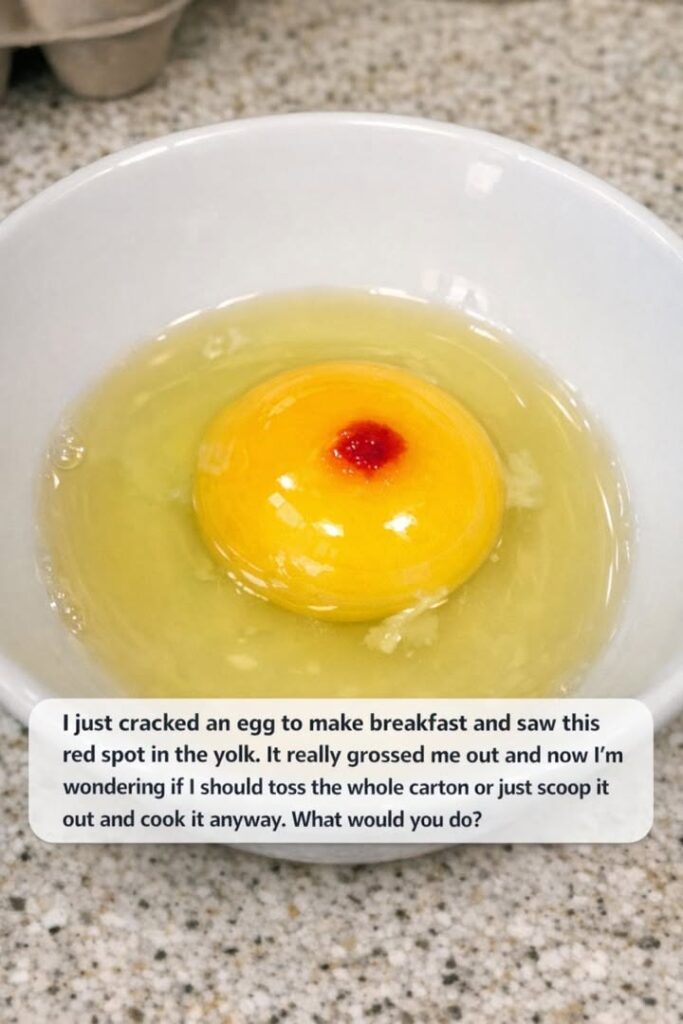
6. Does One Bad Egg Mean the Whole Carton Is Ruined?
Finding a blood spot in one egg doesn’t mean the entire carton is compromised. Each egg is an individual product, and the presence of a blood spot in one doesn’t affect the others.
However, if you notice multiple eggs with unusual features like off smells or discoloration, it may indicate a problem with the batch, and you should consider contacting the supplier or store for a replacement.
7. How Common Blood Spots Are—and What Causes Them
Blood spots occur in about one in every dozen eggs. They are more prevalent in eggs that are laid by older hens, as well as in certain breeds that lay brown eggs.
Factors such as the hen’s diet, stress levels, and age can influence the occurrence of blood spots. While extensive candling during processing reduces their frequency in store-bought eggs, some still make it through to consumers.
8. How to Candle or Check Eggs Before You Crack Them
Candling is a technique used to inspect eggs for internal defects without cracking them open. At home, you can do a simple version by holding the egg up to a bright light in a dark room. This won’t show blood spots explicitly but can help identify larger issues like large air cells or cracks.
If you want to be extra cautious, you can also perform a float test. Place the egg in a bowl of water; if it sinks and lays flat, it’s fresh. If it stands upright or floats, it may be old or spoiled.
9. What Red Spots Say About Egg Quality, Freshness, and Farming Practices
The presence of a blood spot in an egg doesn’t necessarily speak to its quality or freshness. Many factors, including the hen’s health and living conditions, can contribute to the occurrence of blood spots.
However, consistent occurrences of blood spots in eggs from a particular source could indicate issues with the farming practices, such as poor feed quality or inadequate lighting conditions in henhouses.
10. When a Weird-Looking Egg Really Is a Red Flag
Not all oddities in an egg are harmless. If you notice an egg with multiple irregularities like a sulfurous smell, unusual textures, or greenish yolks, these can be signs of spoilage or bacterial contamination.
It’s important to trust your senses. If something seems off about an egg, it’s best to discard it rather than risk foodborne illness.
11. Smart Egg-Handling Habits to Feel Confident About Breakfast Again
To ensure your eggs are safe to eat, store them properly in the refrigerator at 40°F (4°C) or below. Use them within three weeks of purchase for optimal freshness.
Always wash your hands after handling raw eggs and clean any surfaces they contact. By following these simple habits, you can enjoy your eggs with confidence, regardless of the occasional blood spot.