
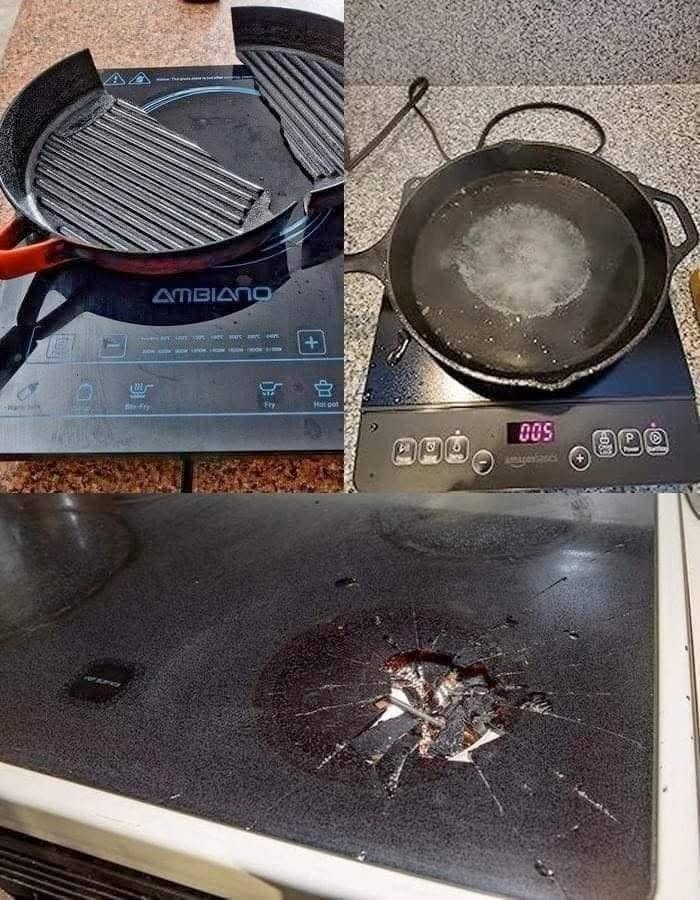
5. Avoid Extreme Temperature Changes
Sudden temperature shifts can place stress on glass surfaces. Placing very hot cookware on a cold area of the cooktop—or vice versa—may increase the risk of cracking.
Using heat-resistant pads or allowing cookware to adjust gradually can help reduce thermal shock.
6. Do Not Ignore Cracks or Chips
Even small cracks or chips can become serious over time due to repeated heating and cooling cycles.
If you notice any damage, stop using the cooktop and consult the manufacturer or a qualified technician.
Ignoring damage can lead to safety risks and costly repairs.
7. Avoid Heating Empty Cookware
Heating an empty pot or pan can cause it to overheat rapidly, which may damage both the cookware and the glass surface underneath.
Always ensure there is food or liquid inside before applying high heat.
8. Do Not Use Damaged or Rough-Bottom Cookware
Cookware with warped, rough, or uneven bottoms can scratch the glass surface and reduce heating efficiency.
For best results, use smooth, flat-bottomed cookware designed for glass stovetops.
Regularly inspect your pots and pans for wear and damage.
Final Thoughts
Proper care of a glass stovetop is simple but essential. By avoiding abrasive cleaning tools, preventing impacts, and using the right cookware, you can significantly extend the lifespan of your appliance.
Following manufacturer guidelines and practicing safe usage habits will help keep your glass cooktop looking new and performing efficiently for years.