Calcium deficiency can quietly weaken bones, teeth, and overall health. Explore causes, symptoms, consequences, calcium-rich foods, supplements, lifestyle strategies, and prevention for lifelong wellness.
📖 Full Article
✅ Introduction: Why Calcium Is More Important Than You Think
Calcium is often thought of as “just for bones,” but its role in the body goes far beyond skeletal health. Every cell, muscle, and nerve depends on calcium for proper function. From muscle contraction and nerve signaling to blood clotting and heart rhythm, this mineral is truly foundational to life.
Yet, despite its importance, calcium deficiency is surprisingly common worldwide, particularly among women, older adults, and people following restrictive diets. The tricky part? Calcium deficiency can be silent for years, slowly weakening bones, teeth, and muscles without obvious symptoms until serious problems arise.
Understanding calcium deficiency, its causes, consequences, and how to prevent it is essential for long-term health and vitality.
🌿 What Is Calcium Deficiency?
Calcium deficiency, or hypocalcemia, occurs when your body does not have enough calcium to support normal physiological functions.
The body prioritizes calcium for critical processes, such as:
-
Muscle contraction (including your heart)
-
Nerve impulse transmission
-
Blood clotting
-
Hormone release
When calcium intake is insufficient, the body compensates by pulling calcium from your bones, which over time leads to weakened bones, increased fracture risk, and osteoporosis.
🔬 The Science Behind Calcium
Calcium is stored primarily in the bones and teeth (about 99%), while the remaining 1% circulates in blood and supports vital functions.
Key mechanisms of calcium in the body:
-
Bone density maintenance: Continuous remodeling keeps bones strong.
-
Muscle and nerve function: Calcium ions allow muscles to contract and nerves to transmit signals.
-
Heart health: Proper calcium levels are essential for normal heartbeat and vascular function.
-
Hormonal balance: Calcium helps regulate hormones like parathyroid hormone (PTH) and calcitonin, which manage calcium levels.
A deficiency disrupts these functions, potentially causing muscle cramps, numbness, fatigue, and long-term bone fragility.
⚠️ Causes of Calcium Deficiency
1. Inadequate Dietary Intake
-
Diets low in dairy, fortified foods, leafy greens, or nuts.
-
Common among vegans, lactose-intolerant individuals, or those skipping meals.
2. Vitamin D Deficiency
-
Vitamin D is required for calcium absorption in the intestines.
-
Low vitamin D levels mimic calcium deficiency symptoms and worsen bone health.
3. Hormonal Changes
-
Low estrogen in postmenopausal women reduces calcium retention.
-
Thyroid and parathyroid imbalances also affect calcium metabolism.
4. Kidney and Digestive Disorders
-
Chronic kidney disease, Crohn’s disease, and celiac disease reduce absorption.
5. Medications
-
Long-term corticosteroids, proton pump inhibitors, or diuretics can decrease calcium levels.
6. Lifestyle Factors
-
Excess salt, caffeine, and alcohol increase calcium excretion through urine.
-
Sedentary lifestyle reduces bone strength and calcium retention.
⚠️ Signs and Symptoms of Calcium Deficiency
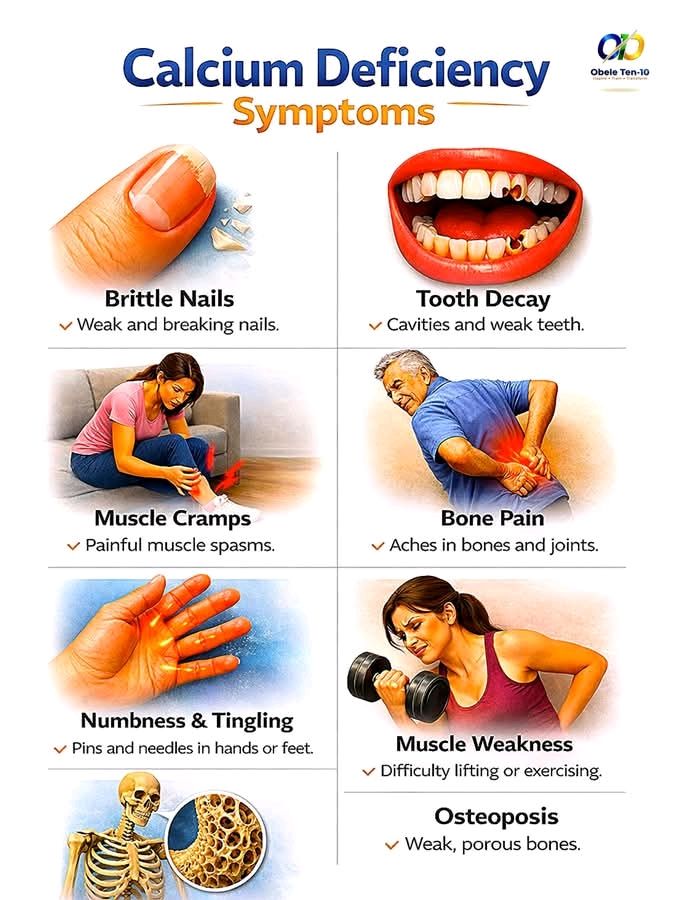
Calcium deficiency can progress silently but eventually manifests as:
-
Muscle cramps or spasms
-
Tingling or numbness in fingers, toes, or around the mouth
-
Brittle nails and hair loss
-
Dental issues: weak enamel, gum problems
-
Bone pain or fractures from minor injuries
-
Fatigue, mood changes, or poor sleep
-
Severe deficiency: irregular heartbeat, seizures, or osteoporosis
Early detection is critical. Blood tests and bone density scans can identify deficiency before it causes serious damage.
🥛 Top Calcium-Rich Foods
1. Dairy Products
-
Milk, cheese, yogurt — highly bioavailable and easy to digest.
2. Leafy Greens
-
Kale, bok choy, collard greens, and broccoli.
3. Fortified Foods
-
Plant-based milks, cereals, orange juice.
4. Fish with Edible Bones
-
Sardines, canned salmon.
5. Nuts and Seeds
-
Almonds, chia seeds, sesame seeds.
6. Legumes
-
White beans, lentils, chickpeas.
Pair calcium-rich foods with vitamin D sources to maximize absorption.
💊 Calcium Supplements
-
Common forms: calcium carbonate (best with food) and calcium citrate (absorbed on empty stomach).
-
Adult daily requirement: 1000–1200 mg/day, varying with age and sex.
-
Supplements should be balanced with vitamin D, magnesium, and K2 for optimal bone health.
⚠️ Excess calcium can cause kidney stones and interfere with absorption of other minerals. Always consult a healthcare provider before supplementing.
🏋️♀️ Lifestyle Strategies to Prevent Deficiency
1. Weight-Bearing Exercise
-
Walking, jogging, resistance training, yoga — all strengthen bones and help calcium retention.
2. Sunlight Exposure
-
Boosts vitamin D synthesis for better calcium absorption.
3. Limit Salt, Caffeine, Alcohol
-
Excess intake increases calcium loss in urine.
4. Quit Smoking
-
Smoking reduces bone mass and calcium retention.
5. Monitor Bone Health
-
Especially for women after menopause or those at high risk of osteoporosis.
✨ Prevention and Daily Habits
-
Include calcium-rich foods in every meal.
-
Pair with vitamin D sources like sunlight, fatty fish, or fortified foods.
-
Perform daily physical activity, especially weight-bearing exercises.
-
Avoid habits that increase calcium loss: high salt, caffeine, sedentary lifestyle.
-
Monitor bone density and consult healthcare providers for regular checkups.
✅ Long-Term Benefits of Adequate Calcium
-
Stronger bones and teeth
-
Reduced risk of fractures and osteoporosis
-
Better muscle function and coordination
-
Healthy heart rhythm and nerve function
-
Hormonal balance and overall vitality
-
Improved quality of life in older age
Calcium is foundational — protecting it today pays dividends in mobility, strength, and wellness tomorrow.