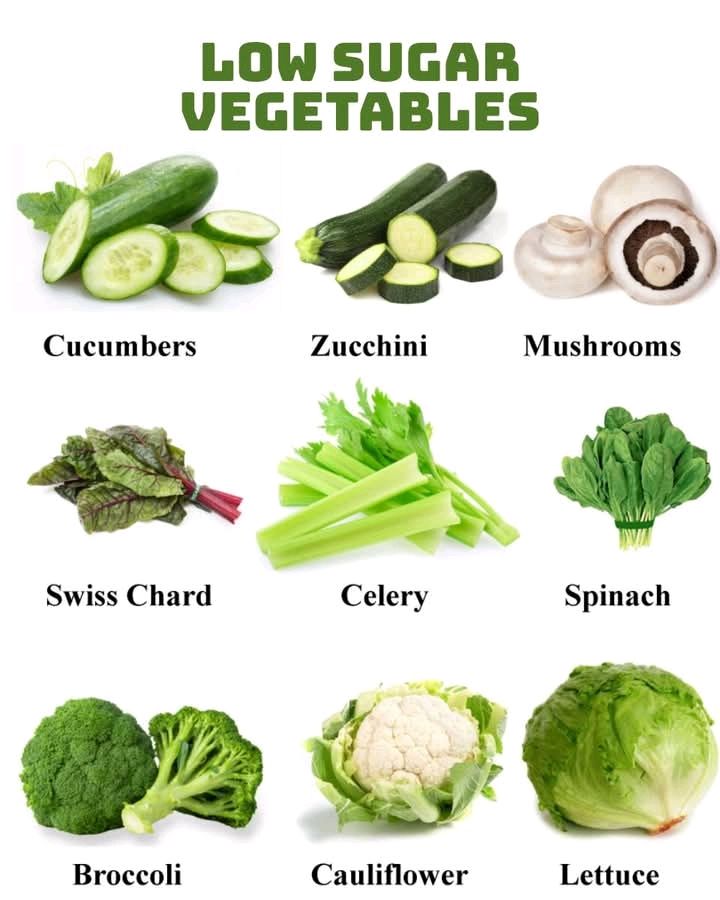
Low-sugar vegetables aren’t just gentle on glucose levels — they provide volume, minerals, fiber, and chewing benefits that help control appetite, reduce blood sugar spikes, and support overall health.
📖 Full Article
✅ Introduction: Why Low-Sugar Doesn’t Mean Low Impact
When it comes to managing blood sugar, many people think only of cutting sugar or avoiding carbs. But low-sugar vegetables offer a surprisingly powerful effect on glucose regulation, appetite, and long-term health.
Unlike sugary foods, these vegetables slow digestion, add volume to meals, and provide essential minerals, making them a cornerstone for anyone looking to stabilize energy levels and reduce cravings.
The magic lies not just in their sugar content — it’s in their fiber, structure, and chewing demands, which all signal fullness to the body and improve metabolic outcomes.
💡 The Science Behind Volume, Minerals, and Chewing
1. Volume
-
Vegetables like broccoli, cauliflower, zucchini, and leafy greens add bulk to meals without adding many calories.
-
Larger volume slows gastric emptying, meaning glucose enters the bloodstream more gradually.
-
You feel full longer, reducing the likelihood of snacking or overeating later.
2. Minerals
-
Magnesium, potassium, and calcium in vegetables support insulin sensitivity and help regulate blood pressure.
-
These minerals are essential cofactors for enzymes that process glucose efficiently.
3. Chewing
-
Crunchy vegetables require more chewing, which slows eating, enhances saliva production, and promotes satiety signals to the brain.
-
This natural mechanism reduces “rebound hunger” that often follows high-sugar or low-volume meals.
🔥 Best Low-Sugar Vegetables for Blood Sugar Support
1. Leafy Greens
-
Spinach, kale, Swiss chard
-
Packed with fiber, vitamins, and minerals with almost no sugar.
2. Cruciferous Vegetables
-
Broccoli, cauliflower, Brussels sprouts
-
High in fiber, antioxidants, and phytonutrients that support glucose metabolism.
3. Cucumbers and Zucchini
-
Hydrating, crunchy, and low in carbs.
-
Excellent for volume and chewing satisfaction.
4. Bell Peppers
-
Slightly sweet but very low in sugar.
-
Rich in vitamin C, potassium, and antioxidants.
5. Mushrooms
-
Low in sugar and calories, high in minerals like selenium.
-
Add umami and bulk to meals without affecting glucose.
6. Green Beans and Asparagus
-
High in fiber and micronutrients.
-
Slow digestion and provide sustained fullness.
🥗 How to Incorporate These Vegetables Effectively